



STORY BY GILBERT BORKETEY BOYEFIO
The Second Vice President of the Pan-African Parliament (PAP), H.E. Hon. Dr. ZanetorAgyeman-Rawlings, has reaffirm the Pan-African Parliament’s collective commitment to advancing human dignity, democratic governance, justice, peace, and the protection of the rights of all African people.
She emphasized that human rights are not abstract principles, but are about whether a child can access education safely; whether a woman can access medical care; whether a woman can participate fully in public life without fear; whether young people can find opportunity and inclusion instead of frustration and exclusion; and whether citizens can speak freely, organize peacefully, and trust the very institutions meant to protect them.
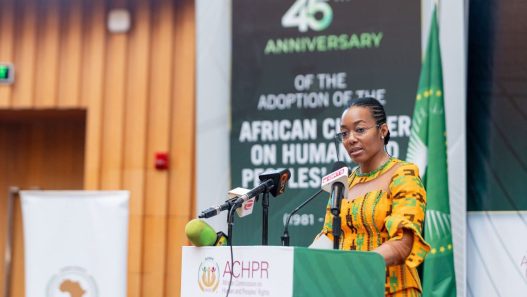
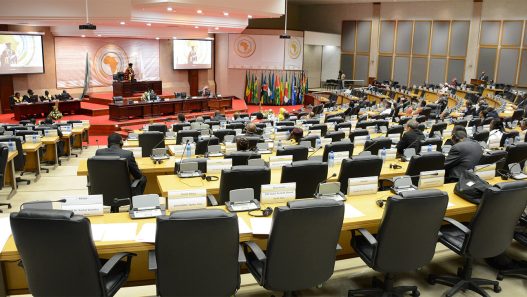
Speaking during the Opening Ceremony of the 87th Ordinary Session of the African Commission on Human and People’s Rights (ACHPR) in Banjul, The Gambia, H.E. Hon Dr Agyeman-Rawlings observed that the Ordinary Session is taking place at a time that calls for deep reflection, but also courageous action, noting that, “Across our continent, many of our people continue to face significant challenges: from conflict and violent extremism to unconstitutional changes of government, economic hardship, forced displacement, rising inequality, climate insecurity, and growing mistrust in institutions”.
Peace and Security
She indicated that peace and security cannot be separated from governance and human rights, pointing out that, “Where justice is absent, instability grows. Where exclusion persists, insecurity deepens. Where institutions fail to protect the dignity and rights of citizens, trust erodes and tensions rise. It is therefore essential that we strengthen the link between the African Governance Architecture and the African Peace and Security Architecture”.
“Too often, we approach governance, peacebuilding, and security as separate conversations, when in reality they are connected. Sustainable peace requires accountable governance. Democratic governance requires respect for human rights. And strong institutions are essential for both stability and development,” she indicated.
According to her, “If we are serious about preventing conflict on our continent, then we must invest not only in military responses, but also in strengthening institutions, protecting civic space, advancing constitutionalism, supporting inclusive dialogue, and ensuring that citizens feel seen, heard, and represented. This requires political will and accountable leadership from all stakeholders across the continent.”
Xenophobia
H.E. Hon Dr Agyeman-Rawlings also touched on worrying divisions emerging among African people themselves, referring to recent attacks and hostility directed at fellow African nationals in parts of South Africa, noting that, “This reminds us that xenophobia, intolerance, and Afrophobia threaten not only the safety and dignity of individuals, but also the very ideals upon which Pan-Africanism was built. As Africans, we cannot advocate for unity at the continental level while allowing fear, misinformation, economic frustration, and social tensions to divide us from one another. The dream of African integration must be grounded solidarity, mutual respect, and recognition of our shared humanity”.
Ratification and Implementation of the Malabo Convention
She acknowledged how the negative impact of cybercrime, misinformation, disinformation, digital fraud, hate speech, online exploitation, and attacks on critical infrastructure, are increasingly affecting governance, security, economic stability, and social cohesion across Africa; taking the opportunity to advocate for Member States to ratify and implement the Malabo Convention.
The Malabo Convention is an important African-led framework that seeks to strengthen cybersecurity, improve data protection, combat cybercrime, and build safer digital ecosystems across the continent.
“Unfortunately, discussions around the Convention often focus disproportionately on fears and criticisms, while failing to adequately highlight the opportunities and protections it offers African countries and citizens. At a time when Africa is expanding its digital economy and deepening continental integration through initiatives such as the African Continental Free Trade Area, digital trust and cybersecurity are no longer optional; they are essential.
Ratifying the Convention can help Member States strengthen national cybersecurity systems, improve cooperation between states, protect citizens and businesses from cyber threats, encourage responsible digital innovation, and create greater confidence in digital commerce and public services,” she emphasized.
She stressed that implementation of the Malabo Convention must remain anchored in transparency, democratic accountability, and the protection of fundamental human rights and freedoms, arguing that security and freedom should not be viewed as opposing goals. Africa must build digital systems that are both secure and rights-based.
Underscoring the important role parliamentarians play in the localization of the Malabo Convention, H.E. Hon Dr Agyeman-Rawlings challenged African parliamentarians to bridge the gap between continental institutions and the realities faced by African citizens every day. “We must strengthen oversight, promote accountability, harmonize legislation, and ensure that African governance systems remain responsive to the needs of the people. Ultimately, the Africa we want will not be built through declarations alone. It will be built through ethical leadership, strong institutions, active citizenship, and a collective commitment to justice, dignity, peace, and shared prosperity”.
She called on African leaders and policy makers participating in the Session in Banjul to renew their commitment to an Africa where governance and peace reinforce one another; where institutions protect rather than exclude; where women and young people are empowered as equal partners in development and peacebuilding; where technology serves humanity responsibly; and where every African citizen can live with dignity, freedom, opportunity, and hope.