

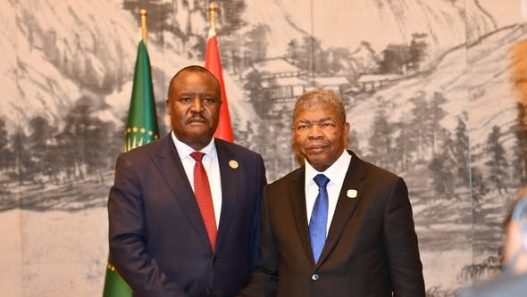


Story by: Gilbert Borketey Boyefio
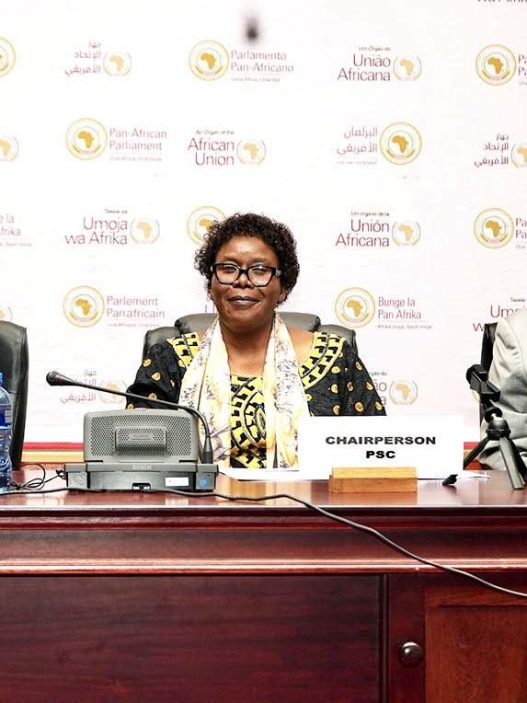
Midrand, South Africa: The Chairperson of the Peace and Security Council, H.E. Rebecca Amuge Otengo, has noted that the majority of youth in Africa do not have stable economic opportunities, and as a result, are vulnerable to recruitment, and radicalization by extremists who exploit these grievances, while promising them an alternative and better livelihood.
According to the June 2025 Paper by the Africa Development Bank entitled: “Unlocking Energy, Jobs and Opportunity for Africa’s Growing Young Population”; Africa has the world’s fastest growing, and youngest, population. More than 60% of the people are under 25 years of age. Also, the United Nations Economic Commission for Africa data indicates that Africa’s youth population is expected to grow by 138 million in the next 25 years.
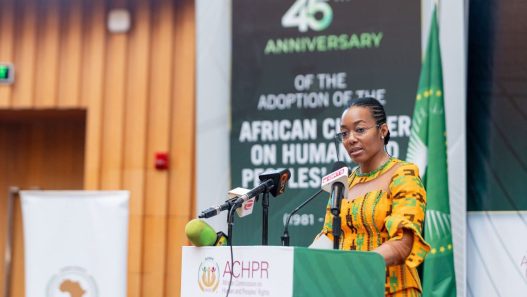
Speaking at the Opening Ceremony of the two-days Joint Consultative Meeting between the Pan-African Parliament (PAP) and the Peace and Security Council (PSC), H.E. Rebecca Amuge Otengo, pointed out that “How Africa handles this demographic growth, will determine whether it turns into a dividend or a divide”.
She highlighted the growing disillusionment among Africa’s youth, marked by unemployment, social exclusion, and political apathy, and underlined the need for more inclusion of youth, and women in all efforts aimed at addressing the conflicts on the continent and in Africa’s development agenda.
She proposed the notion of value addition to all Africa’s mineral and natural resources as one of the solutions to the creation of economic opportunities in Africa. “By adding value to our products, we would not only create the necessary jobs on the continent, that many of our young men and women are looking for, but we would restore hope for a bright future of inclusive prosperity”.
She further observed that 65% of all the uncultivated arable land left in the world lies in Africa. But yet Africa is a net food importer with a high propensity to food insecurity. “It is estimated that by the end of this year, Africa will be spending at least 110 billion USD on food imports. Imagine if this money was spent on intra-African food trade?” she pointed out.
“Agriculture, therefore holds the key to accelerated sustainable and inclusive growth and development. It may be useful for all of us to collectively build momentum and push for investments in Agriculture, Agri business and Agro processing in line with the Kampala Comprehensive Africa Agriculture Development Programme (CAADP) Declaration on Building Resilient and Sustainable Agrifood Systems in Africa,” she appealed.
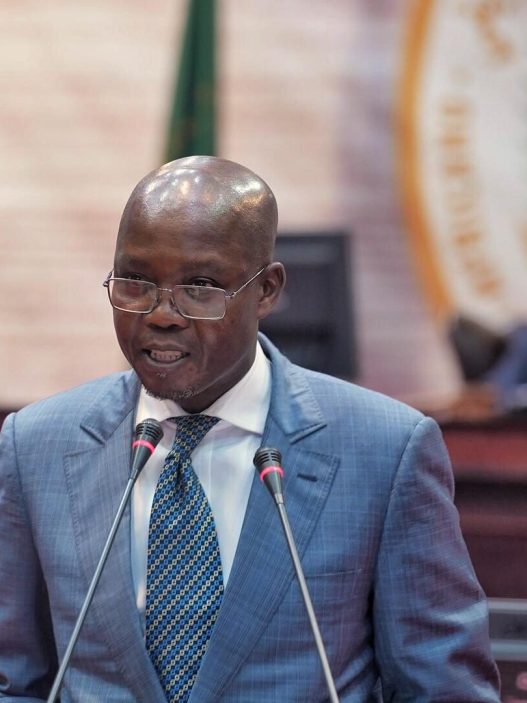
Buttressing the significant role the youth in Africa play in the promotion of peace and security on the Continent, H E Bankole Adeoye, Commissioner for Political Affairs, Peace and Security, observed that no peace will be sustained without the youth and women.
“I’ve emphasized leveraging youth and women for peacebuilding, and one of the things we are now doing is to look at quick-impact projects. We are going to be assisting member states in investing directly in peacebuilding for communities that have been affected, particularly the post conflict ones” he noted.
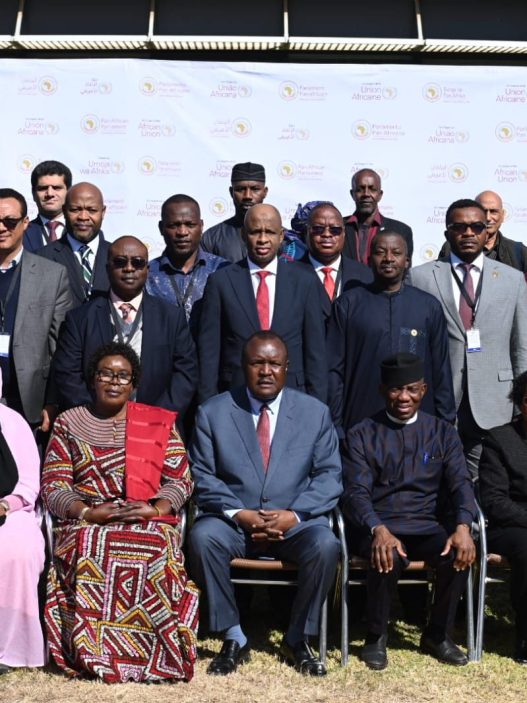
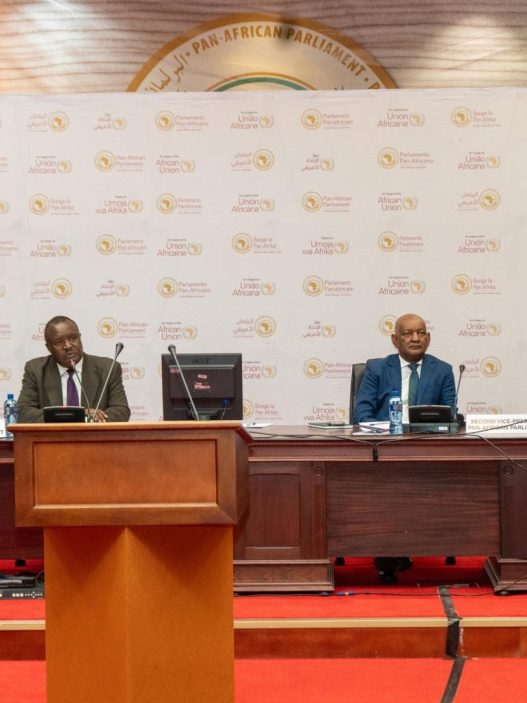
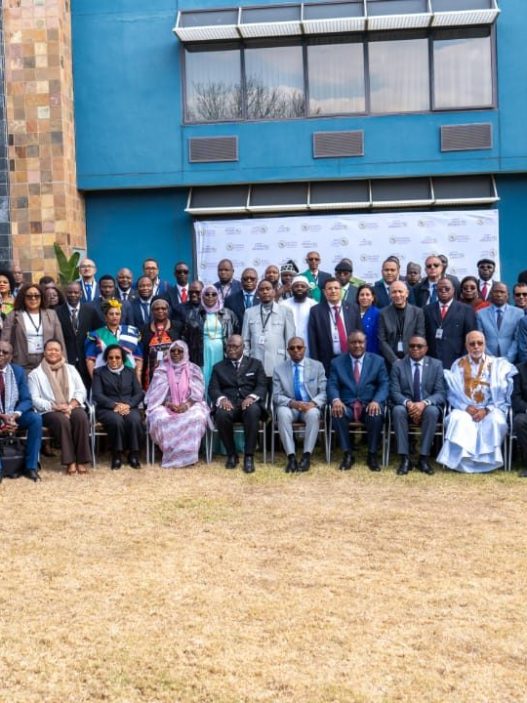
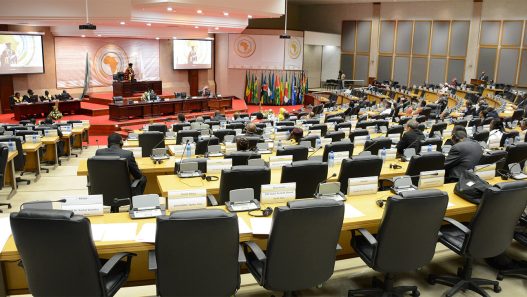
The PSC and PAP Joint Consultative Meeting is organized under the theme “Enhancing Institutional Synergy and Collaboration for Sustainable Peace and Security in Africa”, from Thursday 17 to Friday 18 July 2025 at the precinct of the Pan-African Parliament.
Objectives of the Joint Consultative Meeting
The main objective of the retreat is to strengthen the institutional collaboration between PAP and the AU PSC by: Strengthening cooperation and collaboration: Enhancing mutual understanding of respective mandates and operational frameworks. Fostering communication between the PSC and PAP to enhance the effectiveness of governance, peace and security across the continent; Engagement of conflict prevention, management and resolution: Exploring structured mechanisms for engagement on peace and security matters. Identify and develop joint strategies for conflict prevention, management and resolution, as well as post-conflict reconstruction in Africa; Sharing best practices: Share experiences and best practices among Member States to enhance collective learning and improve effectiveness of peace and security efforts of the PSC and PAP; and Creating channels for PAP’s oversight and advocacy role in the implementation of AU peace and security initiatives.