


STORY BY – BYRON ADONIS MUTIGWENDE
Addis Ababa, 11 February 2026 – The African Union’s Committee of Permanent Representatives (PRC) has called for accelerated institutional reforms, stronger financial discipline, and improved coordination across AU organs, as it presented its report to the 48th Ordinary Session of the Executive Council in Addis Ababa.
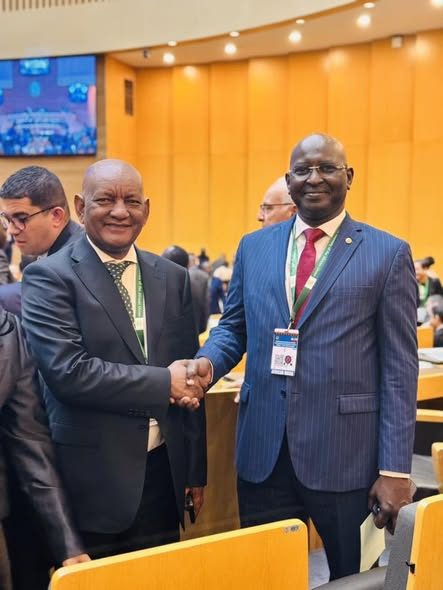
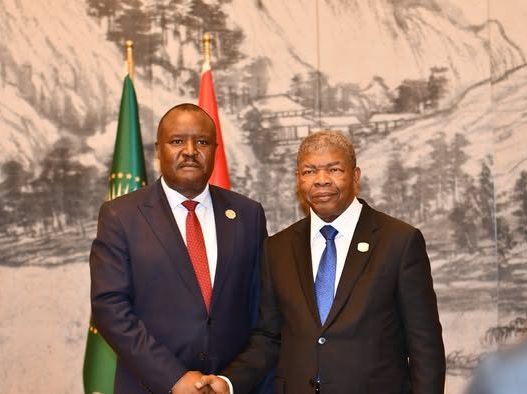
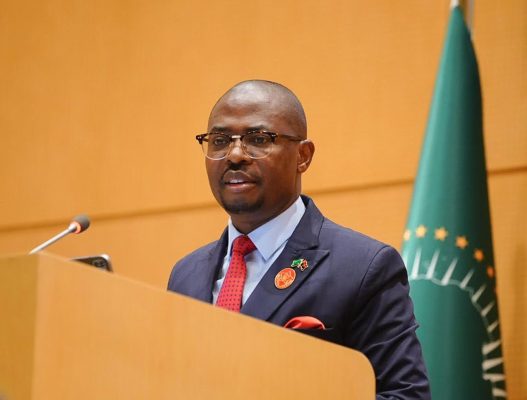
Delivering the statement at Nelson Mandela Hall, His Excellency Ambassador Professor Miguel César Domingos Bembe, Permanent Representative of Angola to the African Union and Chairperson of the PRC, outlined the outcomes of the Committee’s 51st Ordinary Session held from 12 to 30 January 2026.
He said the session focused on preparing technical, legal, and political groundwork for both the Executive Council and the upcoming 39th Ordinary Session of the Assembly of Heads of State and Government.
Ambassador Bembe explained that the PRC examined draft reports, legal instruments, and proposed decisions to ensure that they reflect the collective interests of AU Member States.
“This exercise made it possible to clarify options, reduce differences and ensure that the documents presented reflect, in a balanced manner, the collective interests of Member States,” he noted, emphasizing that the aim was to enhance predictability and efficiency in the Union’s decision-making processes.
Among the key areas reviewed were structural reforms, audit and risk management, multilateral cooperation, environmental issues, human rights and governance, migration and displacement, and the activities of the African Union Development Agency (AUDA-NEPAD).
In total, eleven strategic reports relating to the work of the PRC were analyzed and are now before the Executive Council for adoption.
A major highlight of the presentation was the status of the African Union Reserve Fund, which has seen significant depletion.
As of 31 July 2025, the Reserve Fund stood at USD 56 million. However, withdrawals of over USD 42 million to cover operational needs for the first quarter of 2025 reduced the balance to approximately USD 14.8 million.
A further USD 7 million was withdrawn to support initial staff placement costs under the Skills Audit and Competency Assessment (SACA) process, an administrative reform initiative aimed at strengthening efficiency and institutional credibility within the AU Commission.
The current balance now stands at just over USD 7.8 million.
Ambassador Bembe stressed the urgency of accelerating administrative reforms, particularly the SACA process, to safeguard institutional sustainability and ensure that financial resources are used effectively.
The PRC also took note of seven strategic reports from the Specialised Technical Committees (STCs), which operate at the ministerial level and focus on implementing Agenda 2063: the AU’s long-term blueprint for continental transformation.
These reports covered:
- Migration, refugees, and internally displaced persons
- Finance and economic integration
- Gender equality and women’s empowerment
- Youth, culture and sport
- Justice and legal affairs
- Agriculture, rural development, water, and environment
- Defence, safety, and security
In line with established procedures, the PRC did not amend these ministerial-level reports but forwarded them to the Executive Council for adoption.
Ambassador Bembe underscored the importance of aligning all AU programmes, partnerships, and initiatives with Agenda 2063 and decisions of the Assembly and Executive Council.
While acknowledging progress made by the Commission and other AU organs, the PRC identified ongoing challenges, including:
- Limited institutional capacity
- Resource mobilization gaps
- Financial sustainability concerns
- Programme implementation constraints
- The need for stronger accountability mechanisms
The Committee emphasized improving coordination between AU organs and agencies, strengthening operational efficiency, and enhancing the clarity and predictability of reports submitted to policy organs.
Ambassador Bembe called for an integrated, results-based approach to ensure that decisions adopted by the Union translate into tangible improvements in the lives of African citizens.
Several Member States submitted agenda items for consideration.
Angola introduced four items, including:
- Preparations for the Fourth Edition of the Pan-African Forum for the Culture of Peace and Non-Violence in Africa (Biennale of Luanda 2026), scheduled in phases from March to June 2026 and culminating in Luanda on 22–23 October 2026.
- Proposals on improving the working methods of AU organs.
- The institutionalisation of a Constitutional Forum on the Rights and Guarantees of Young African Women and Children.
- A proposal to convene an Extraordinary Session of the Assembly focused on strengthening conflict prevention and resolution mechanisms across the continent.
The following are contributions by other member states.
- Algeria and Ethiopia proposed the AU Theme for 2027: “The African Union on the Eve of its 25th Anniversary: Harnessing the Full Potential of the Single African Air Transport Market (SAATM) and New Technologies for Continental Integration.”
- Togo presented updates on the 9th Pan-African Congress held in Lomé in December 2025, called for revision of a previous Assembly decision, and raised an issue regarding the correction of the Map of Africa.
- Morocco introduced an item on water and sanitation, focusing on South-South cooperation to promote climate resilience and inclusive human development.
Ambassador Bembe reaffirmed the PRC’s commitment to supporting the Executive Council and the African Union Commission in implementing decisions and strengthening the Union’s credibility.
“The report we have submitted is the result of collective, responsible, and constructive work. We are confident that the deliberations of this Session will strengthen the AU’s capacity to respond to the challenges of the present and to prepare, with realism and ambition, for the future of our continent,” he said.
As the Executive Council deliberates on the recommendations, the focus now shifts to translating institutional reform, financial discipline, and strategic alignment into measurable impact, ensuring that the African Union remains responsive, accountable, and firmly anchored in its Agenda 2063 vision for a prosperous and integrated continent.