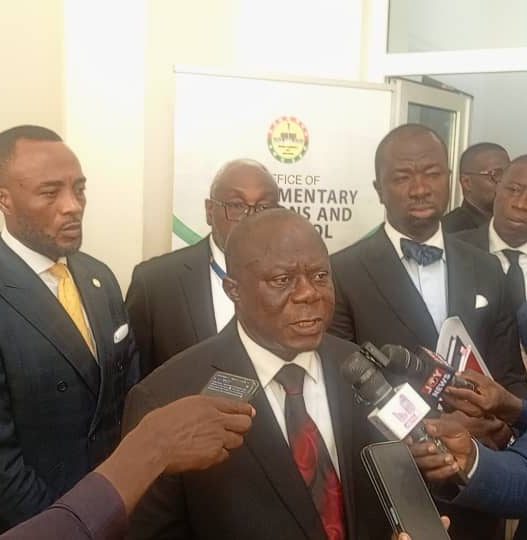



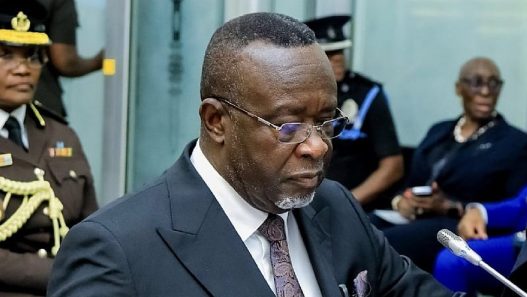


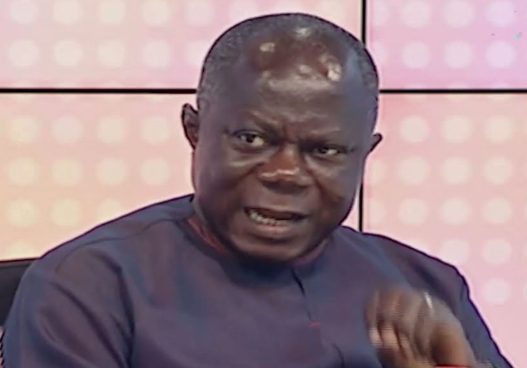

Accra, July 24, 2025 – The Minority in Parliament has launched a scathing critique of the Attorney-General’s decision to discontinue the high-profile criminal prosecution of former UniBank CEO Dr. Kwabena Duffour and seven others. In a strongly-worded press conference held in Accra, the Minority described the Attorney-General’s entry of nolle prosequi as deeply troubling, raising constitutional, ethical, and procedural concerns.
The press briefing comes two days after the Deputy Attorney-General issued a statement announcing the withdrawal of the prosecution, citing a “60% recovery threshold” of alleged state losses as justification for terminating the case. The prosecution stemmed from the collapse of UniBank during the financial sector clean-up, in which GH¢5.7 billion in depositors’ funds were reported missing or misused.
Minority Questions Legal Basis of Decision
The Minority dismissed the Attorney-General’s justification as “legally unsound and morally indefensible,” raising several key questions for public clarification. Among the issues raised were:
- Conflict of interest: Whether the Attorney-General, Dr. Dominic Akuritinga Ayine, previously served as legal counsel for Dr. Duffour, and if so, whether he recused himself in accordance with professional ethics.
- Legality of nolle prosequi in cases involving serious economic crimes: The Minority argued that while prosecutorial discretion exists, the law mandates due process, especially in financial crimes of this magnitude.
- 60% Recovery Threshold: The Minority challenged the origin and legality of the 60:40 policy referenced in the AG’s statement. They questioned when such a policy was introduced, whether it had legal backing, and why Parliament was never informed.
“Is this the new goat-thief approach to justice – take 60% and forget the rest?” one MP queried during the conference. The group further questioned how GH¢800 million in recovered funds could suddenly be equated to 60% of losses initially pegged at GH¢5.7 billion.
Breach of Section 35 of the Courts Act?
The Minority argued that the Attorney-General overlooked the legal avenue provided under Section 35 of the Courts Act, 1993 (Act 459), which outlines procedures for restitution in economic loss cases. They emphasized that such restitution must be supervised by the courts and often includes a conviction or formal agreement.
“There’s no evidence the accused persons pleaded guilty, nor that any court approved a restitution plan,” the Minority stated. “So, on what basis did the Attorney-General allow them to walk free?”
They also questioned why the case was not resolved through the plea bargaining provisions under Section 162 of the Criminal and Other Offences Procedure (Amendment) Act, 2022 (Act 1079), which similarly requires judicial oversight.
Call for Institutional Oversight and Legal Review
The Minority called on Parliament’s Constitutional, Legal, and Parliamentary Affairs Committee to summon the Attorney-General for a public hearing. They further urged the Ghana Bar Association and General Legal Council to investigate any possible breaches of legal ethics or professional misconduct.
In a passionate closing, the Minority warned that if the Attorney-General’s decision is not reversed within a “reasonable timeframe,” they would seek judicial intervention to challenge the legality of the discontinuation.
“This is not merely about Kwabena Duffour. It is about the integrity of our justice system. Justice must not only be done – it must be seen to be done,” they declared.
Background
Dr. Kwabena Duffour and others were being tried for alleged offenses including fraudulent breach of trust, money laundering, and the misapplication of depositor funds. The case was one of several high-profile prosecutions following the 2018 banking sector reforms, which saw the revocation of licenses and consolidation of multiple banks.
The Attorney-General’s office claimed that continued prosecution was no longer in the public interest due to partial recovery of state funds. The Minority insists that this sets a dangerous precedent, where justice is seemingly traded for partial repayment.
Source: Clement Akoloh||parliamentnews360.com