






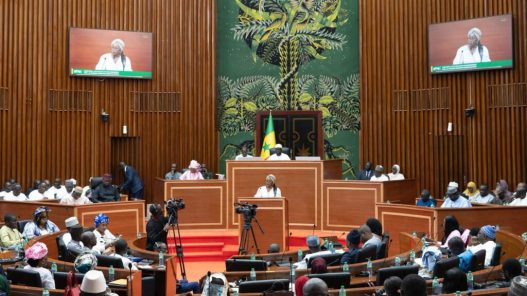

In a plenary session marked by lively debates on transparency and governance, the deputies of the 15th legislature adopted two major texts: Bill No. 13/2025 establishing the status and protection of whistleblowers, and Bill No. 14/2025 on access to information. These reforms reflect a strong political will to strengthen the fight against corruption and consolidate citizens’ right to be informed.
An unprecedented law to protect and promote whistleblowers
Bill No. 13/2025 establishes a comprehensive legal framework for whistleblowers in Senegal for the first time. Those who report acts of corruption, embezzlement, or fraud are now covered by several safeguards:
- Complete protection against retaliation: dismissal, demotion, pay cuts, intimidation, or harassment are prohibited. Protection even extends to the whistleblower’s immediate family.
- Anonymity guaranteed: the report can be made anonymously, and only the courts, with the consent of the person concerned, can access their identity.
- Financial reward: a bonus of 10% of the amounts recovered through reporting is planned, with the remainder being allocated to a special fund dedicated to financing social projects.
- Immunity for participation: Anyone involved in corruption can benefit from a second chance if they report themselves before an investigation is opened and return all amounts received.
- Criminal and civil immunity for the collection of evidence: no prosecution is possible if the whistleblower removes documents to support his report.
In addition, all public administrations and private companies will have to set up an internal system for receiving and processing alerts, guaranteeing the independence of the process.
Access to information recognized as a fundamental right
Bill No. 14/2025 , also adopted on August 26, establishes a universal and regulated right of access to public information. This right is open to any natural person legally residing in Senegal and to any legal entity regularly established in the country.
There are many people subject to this obligation: all institutions of the Republic, local authorities, administrations, but also private companies benefiting from public support or carrying out a public service mission.
The main innovations of the law are:
- Simplified procedure: a written request (or oral for people who cannot read or write) is sufficient to trigger the procedure.
- Strict deadlines: immediate response if possible, or within a maximum of 8 days, extendable to 15 days with justification. In case of emergency, the administration must adapt to the situation.
- Free access rights: only the actual costs of reproduction or transmission may be invoiced.
- Specific exclusions: certain information remains protected (defense secret, medical secret, commercial secret, government deliberations, ongoing judicial investigation, etc.).
- Possible appeals: any refusal must be justified, and the citizen can refer the matter to the National Commission for Access to Information (CONAI), an independent administrative authority with 12 members.
- Deterrent sanctions: fines of 500,000 to 10 million FCFA for any person or entity knowingly refusing to communicate communicable information.
The law also requires administrations to regularly publish certain information on their websites, to train their agents and to set up monitoring committees to guarantee the effectiveness of the system.
A decisive step forward for governance
With these two laws, Senegal has taken an important step in establishing legal instruments designed to strengthen trust between the state, institutions, and citizens. One protects and encourages those who denounce fraudulent practices, while the other enshrines a fundamental right of access to information, an essential condition for open and participatory governance.
These reforms, welcomed by several civil society actors, should contribute to more responsible and transparent public management, while offering citizens new tools to actively participate in democratic life.