


Story by: Gilbert Borketey Boyefio
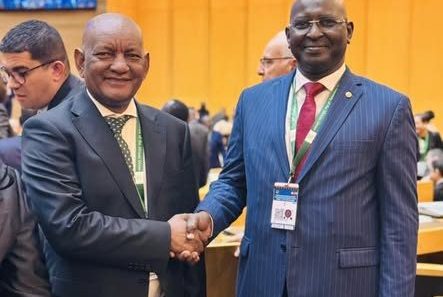
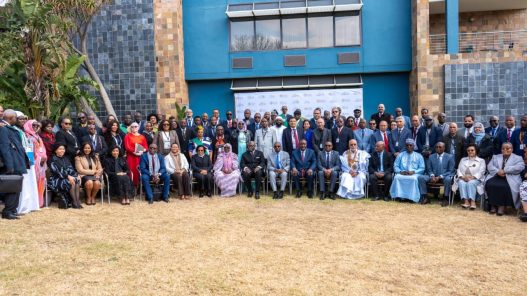
Midrand, South Africa: The Fifth Ordinary Session of the Sixth Parliament of the Pan-African Parliament officially kicked-off with stakeholders made up of Organs of the African Union, State Parties, and Regional Blocs, expressing the need to act decisively and collaboratively to bolster democratic institutions, and promote good governance as a prerequisite for inclusive economic growth and the upliftment of African livelihoods.
The stakeholders made up of the African Peer Review Mechanism, (APRM), AUDA-NEPAD, the South African Government, and the SADC Parliamentary Forum, recognized the crucial role that Parliaments, both at the national and continental levels, plays in overseeing government action, scrutinising public policy, and ensuring accountability for the delivery of national development priorities.
According to Dr. Nardos Bekele-Thomas, Chief Executive Officer of AUDA-NEPAD, “The journey to “The Africa We Want” is a shared one. It requires unwavering commitment, concerted effort, and a deep sense of ownership from all stakeholders. The Pan-African Parliament, as the legislative arm of our Union, holds a unique and powerful position to drive this agenda forward.”
She acknowledged that the role the Pan-African Parliament and national parliaments across the African continent play in the successful implementation of Agenda 2063 is not only important but it is indispensable, adding that, “ You are the direct link to the aspirations of our people, the custodians of our laws, and the watchdogs of our collective progress”.
She therefore appealed to Members of the Pan-African Parliament to actively champion the domestication of the Second Ten-Year Implementation Plan of Agenda 2063 within their respective national contexts. “This means integrating Agenda 2063 into national development plans, strategies, and legislative agendas to ensure that national laws are harmonised with our continental aspirations, providing the necessary legal backbone for our shared vision”.
Dr. Nardos Bekele-Thomas urged PAP MPs to strengthen their oversight mechanisms to ensure that national governments are effectively implementing Agenda 2063. This includes rigorous scrutiny of national budgets to ensure adequate allocation and transparent utilisation of resources for shared goals.
She further encouraged PAP MPs to engage their constituents deeply in the Agenda 2063 journey. “Organise public forums, consultations, and use modern technologies to solicit their input and feedback. Ensure that the voices of all, especially women, youth, and marginalised communities, are heard and reflected in policy-making and implementation. Promote transparency and accountability in all development initiatives, ensuring that the impact is felt where it matters most – at the grassroots”.
On her part, Hon. Sylvia Lucas, Vice President of the SADC Parliamentary Forum, called on parliamentary leadership in harmonizing policies across member states to embed reparations and gender-sensitive approaches in national development plans, ensuring consistency and accountability.
She proposed the establishment of regional technical working groups comprising policymakers, civil society, and experts to facilitate knowledge sharing, coordinate initiatives, and monitor progress on reparative justice and gender inclusion, noting that, “These groups can serve as platforms for exchanging best practices and designing joint regional strategies.”
“Enhance partnerships and synergies between regional institutions and the African Union, international donors, and development agencies to leverage technical assistance, funding, and expertise. By undertaking these concrete actions, our regional bodies can exemplify leadership, promote regional cohesion, and ensure that reparative justice and gender equality are effectively advanced across Africa, aligning with the AU’s 2025 objectives,” she emphasized.
South Africa Pledges Support for PAP
Acknowledging the financial challenges of the Pan-African Parliament, the Deputy Minister of International Relations and Cooperation, Thandi Moraka, pointed out that despite the challenging times of tight fiscal conditions, the South African Government’s commitment to supporting the PAP has not wavered. She noted that the importance of this institution, and the work it does to represent the African people, is crucial to the pursuit of the African Union’s broader objectives.
“As we collectively confront global challenges, from climate change to instability, it is critical that we continue to support the work of the PAP, both in terms of financial resources and political commitment. South Africa, as the host of the PAP, is deeply committed to ensuring that the institution continues to be a beacon of democratic participation, dialogue, and collective decision-making.
Despite our own fiscal constraints, we understand that the health of the Pan-African Parliament is a reflection of the health of African unity and progress. Our responsibility as hosts goes beyond logistics; it is about ensuring that the PAP is empowered to do its work efficiently and effectively. In this context, I am pleased to inform that the process of reviewing the Host Country Agreement is at an advanced stage”, she announced.
PAP Signs MOU with APRM
Formalizing the strategic collaboration between the PAP and the APRM through the signing of a Memorandum of Understanding (MoU), H.E. Ambassador Marie-Antoinette Rose Quatre, Chief Executive Officer, African Peer Review Mechanism Continental Secretariat, noted that, “This landmark agreement is a testament to our shared commitment to accelerate the speedy realisation of Aspiration 3 of AU Agenda 2063: An Africa of good governance, democracy, respect for human rights, justice and the rule of law, and Aspiration 4 : A peaceful and secure Africa.”
She indicated that the shared vision between the APRM and PAP with concrete action by both institutions will ensure the speedily realisation of AU Agenda 2063 Aspirations and most importantly the Second Ten Year Implementation Plan. It is a crystal-clear manifestation of the entrenchment of the solidarity between APRM and PAP.
“Let us work together to cement democratic governance, fortify our institutions, and build an Africa where leadership is accountable, resources are equitably managed, rights are protected, and economic prosperity and opportunities abound for all people”, she admonished.